
Guide for Women Breaking into Investment Banking

A practical preparation system

How I Study for Investment Banking

These are the tools and notes that have helped me the most while preparing for recruiting, technical interviews, and leading study sessions through SWIF.

You do not need to use every tool here. The goal is to give you a focused menu of options so you can build a study routine that fits your schedule and learning style.

Organized investment banking study setup

Core Study Tools

IBvine → IB Technicals Quizlet →

Whether you are just starting or already in the middle of recruiting, having these tools organized in one place can make the process feel less chaotic.

YouTube Technical Walkthroughs

If you learn best by watching someone explain it out loud, these are solid videos to pair with your BIWS guides. Use these for concept clarity, then do reps by answering questions out loud.

Tip: Watch once for understanding, then immediately do 5–10 reps answering out loud (no notes). That’s how you turn “I get it” into “I can explain it.”

Using These Tools in SWIF

Many of these notes and frameworks also show up in the way I help teach and support other students through SWIF and similar groups. Sharing resources, practicing together, and talking openly about what is hard are some of the best ways to make recruiting less isolating.

If you are in a women in finance group, consider using these tools to run your own small study sessions: pick one technical topic and a few behavioral questions, and work through them together.

My Study Notes

My go-to resources for behavioral / fit prep and building strong interview stories:

Recommended Behavioral Resource


My Behavioral Notes

G.A.T.E. - Building Your “Tell Me About Yourself” Answer

Use the G.A.T.E. framework to structure a clear, 45-60 second intro that answers who you are, what you do, and what you want. It helps you come across as organized, confident, and intentional.

G.A.T.E. Method GATE stands for Greeting, Anecdote, Tailored Experience, End Goal. Come out of the GATE with a strong intro ~10% of answer ~30% of answer ~30% of answer ~30% of answer ↓ ↓ ↓ ↓ G A T E Greeting Anecdote Tailored Experience End Goal Present yourself as polite, professional, and warm. “Hi, thank you for taking the time…” Short story that shows who you are: academics, leadership, work, or activities. Connect 1-2 key experiences directly to the role and firm. Use the job description. Explain how this position fits your long-term goals and why this team.

When you’re asked “Can you tell me about yourself?”, walk through G.A.T.E.:

  • Greeting: open with a natural, professional thank-you and set a positive tone.
  • Anecdote: share a short story that captures your background and style.
  • Tailored Experience: pick experiences that align with the role + firm.
  • End Goal: explain how this role fits your long-term goals.
START+T – Structure for Behavioral Answers

Use START+T to answer “Tell me about a time when…” questions in a way that is complete, structured, and easy to follow. Aim to have 4–5 stories you can flex across different prompts.

  • S – Situation: briefly set the scene.
  • T – Task: your responsibility / goal.
  • A – Action: what you did (your decisions + steps).
  • R – Result: the outcome (preferably measurable).
  • T – Takeaway: what you learned.
  • T – Tie: connect it back to this role.
REAL – Answering Weakness and Failure Questions

For “biggest weakness” or “tell me about a failure” questions, use REAL so you are honest, self-aware, and focused on growth.

  • R – Reframe
  • E – Explain
  • A – Action
  • L – Lesson

Official learning resources I recommend alongside my original notes:

Breaking Into Wall Street


Hand-written notes from recruiting and SWIF study sessions:

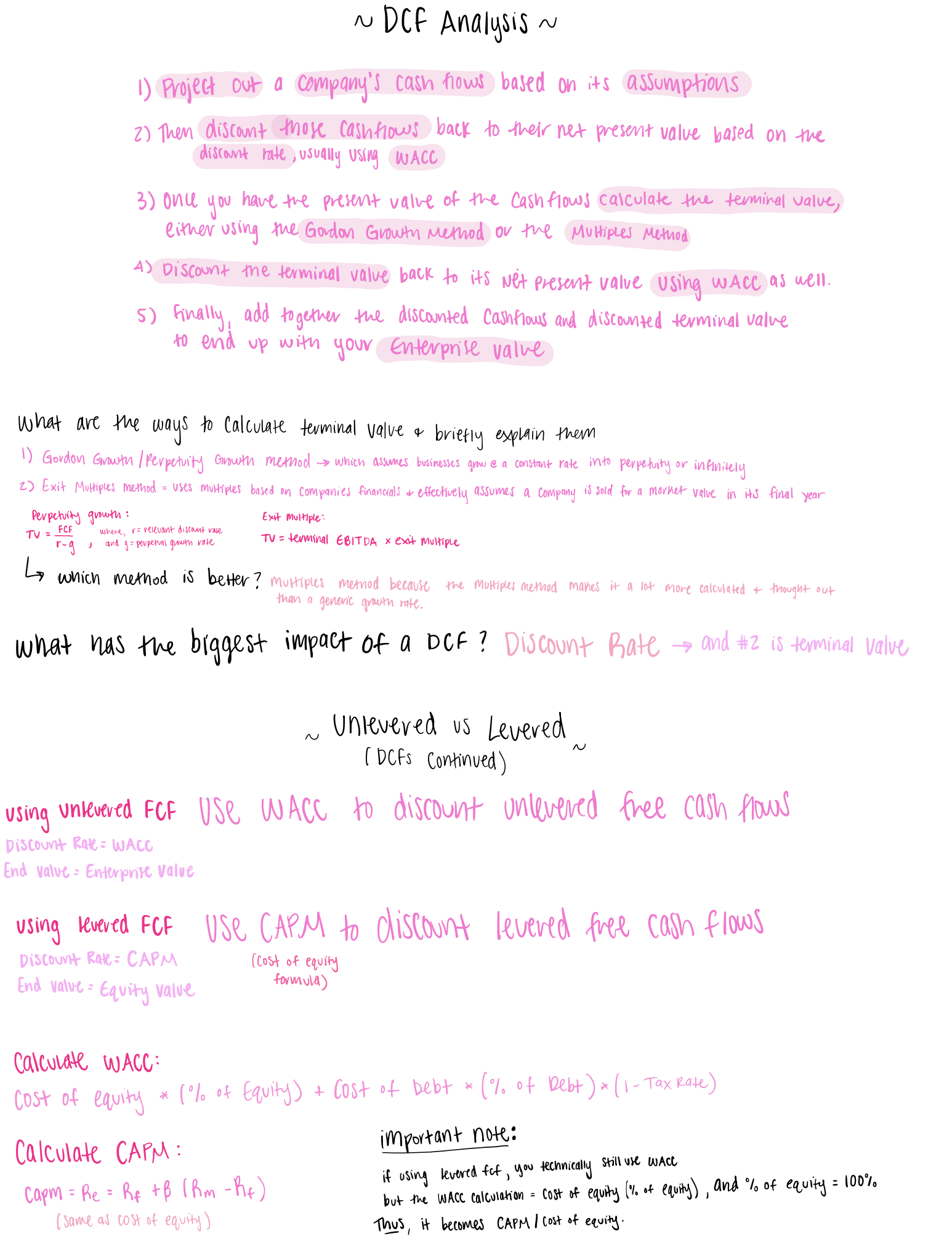
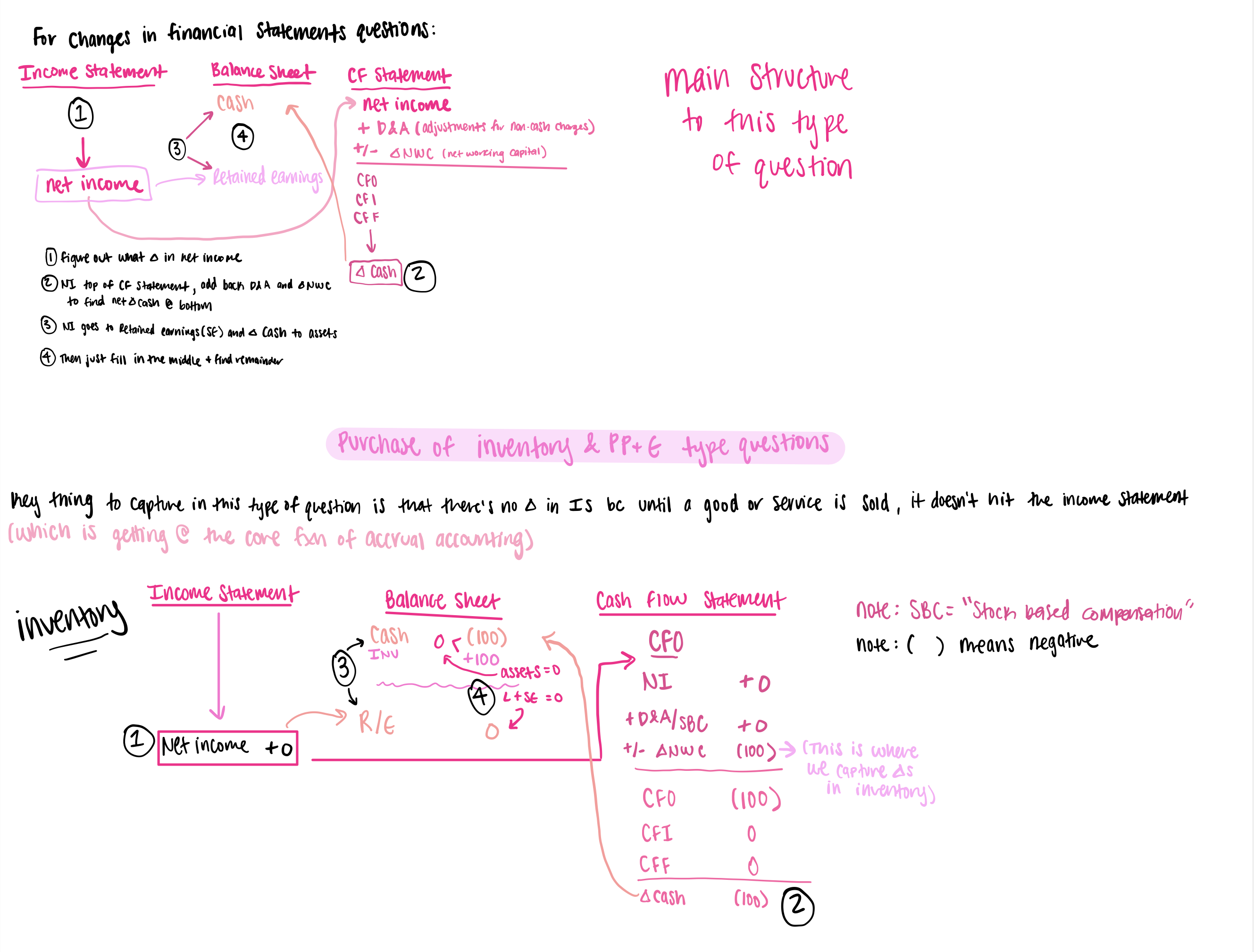
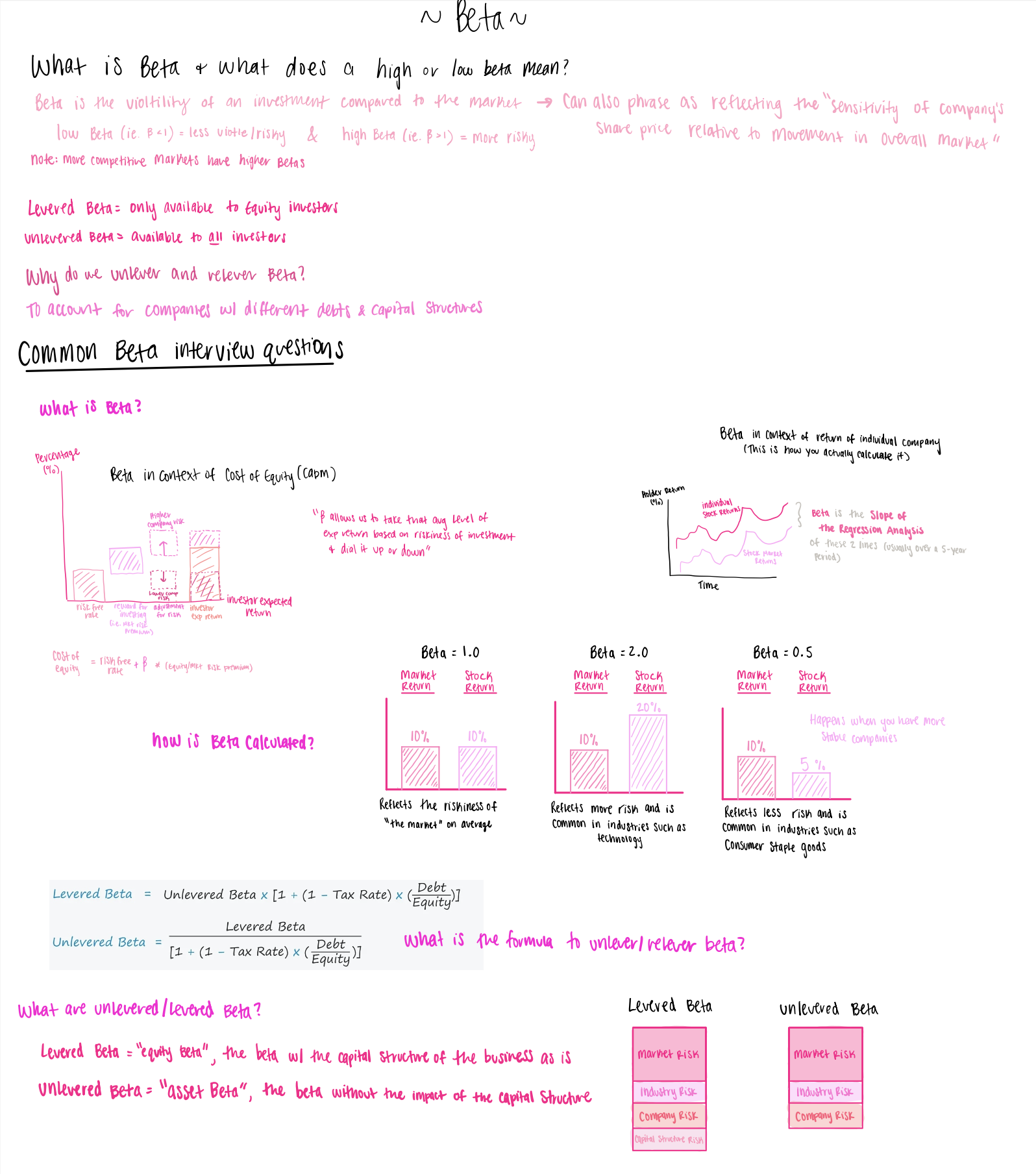
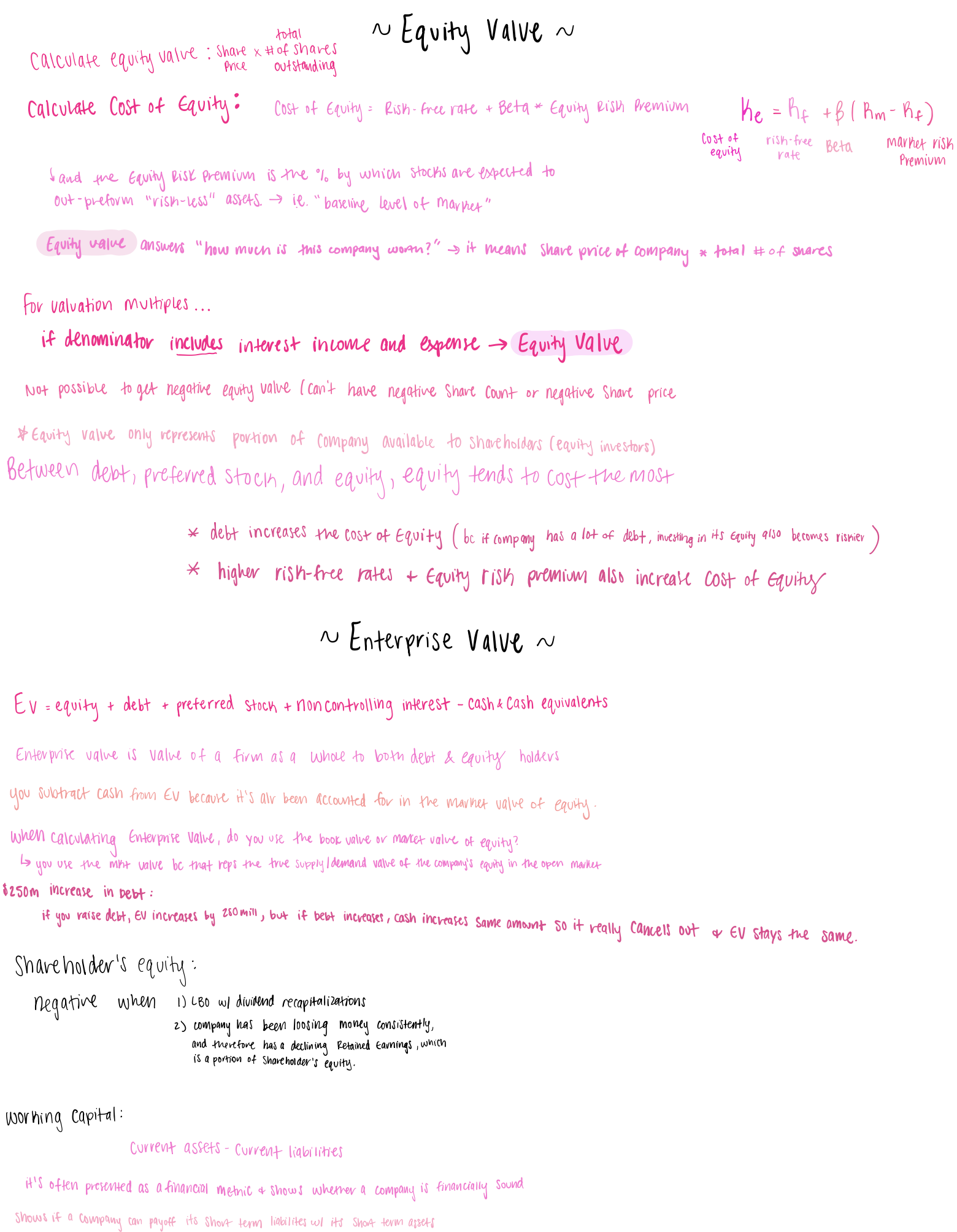
Equity and enterprise value notes DCF model notes Changes to the three financial statements answer format Beta explanation notes
Back to top ↑